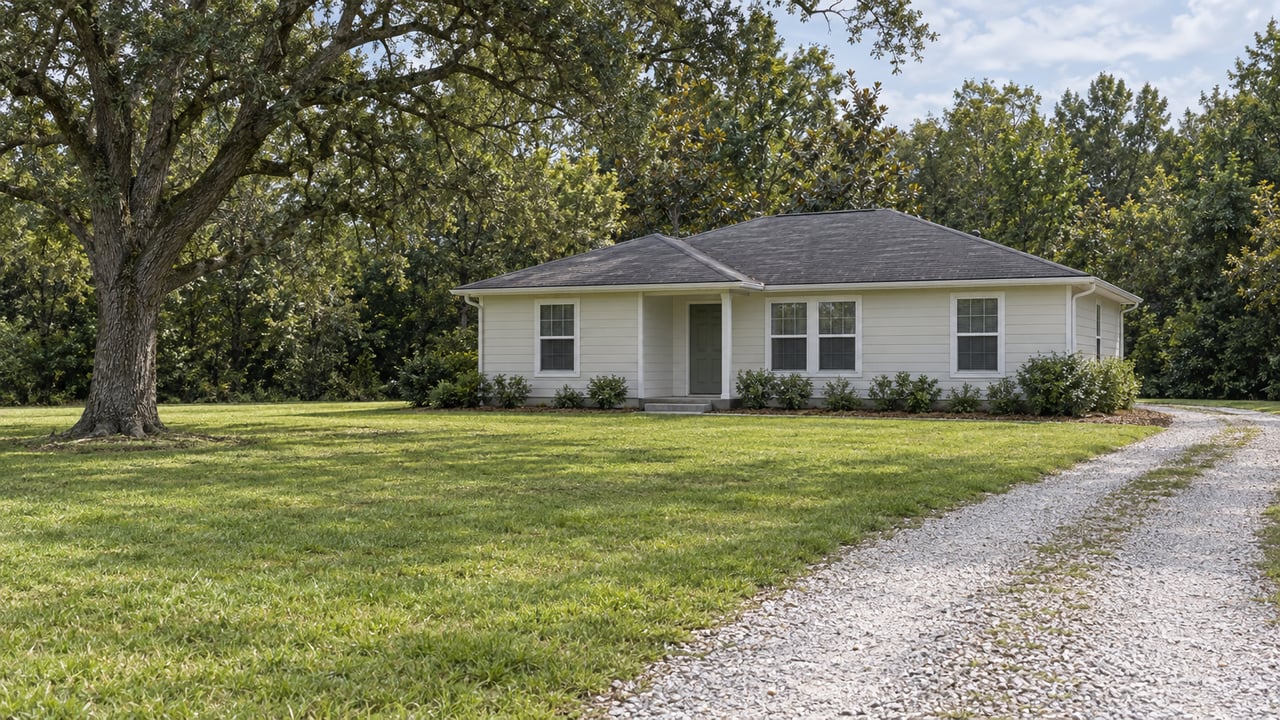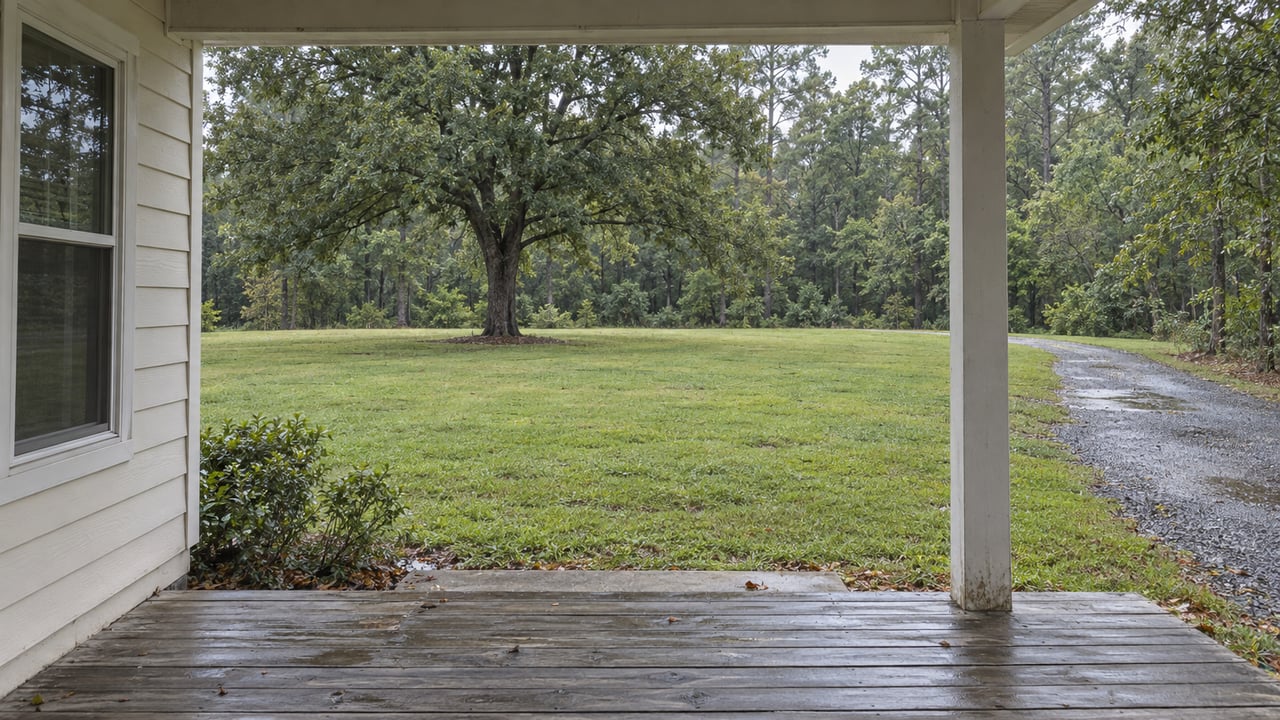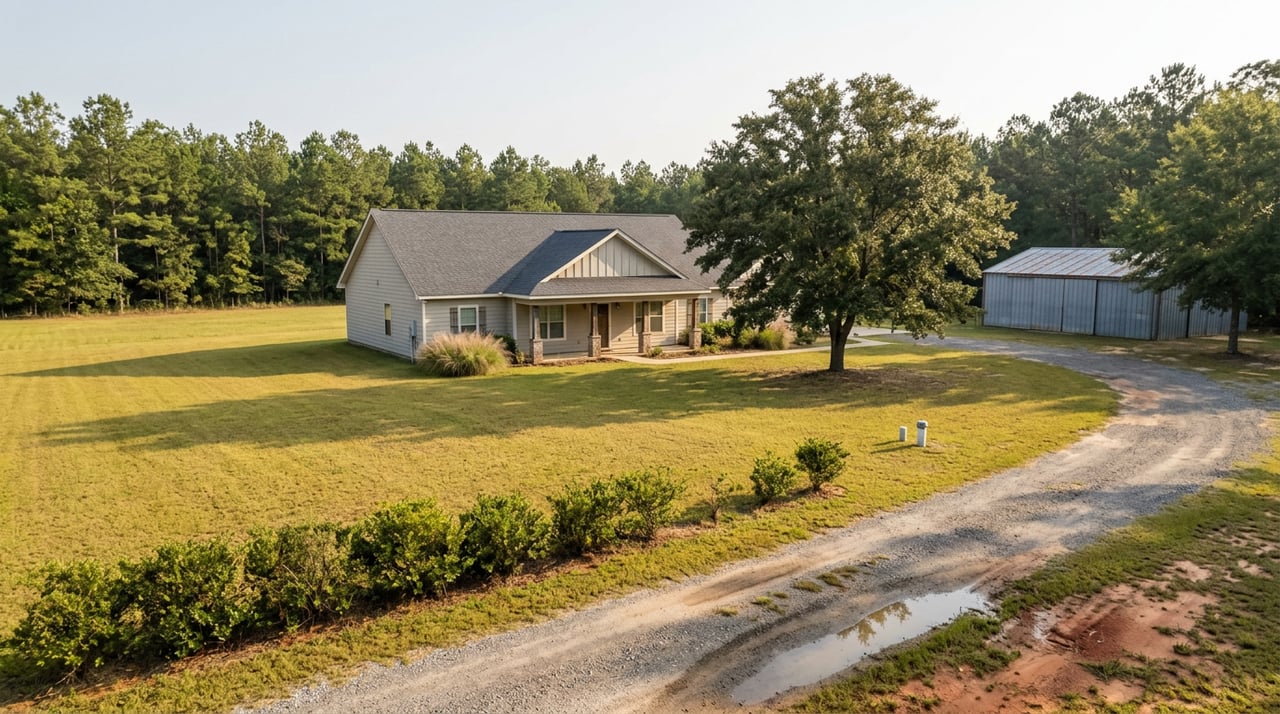
Thinking about buying land near Folsom? A beautiful tract can look simple from the road, but acreage purchases often come down to what you can do with the land, how you access it, and what it will take to make it build-ready. If you want more space, privacy, or room for a future home, this guide will help you focus on the details that matter most before you buy. Let’s dive in.
Why Folsom acreage draws buyers
Folsom is known as a rural area in the rolling hills and towering pines of northwest St. Tammany Parish. That setting is a big reason many buyers start looking here when they want extra room, a quieter pace, or a homesite with more flexibility than a typical subdivision lot.
At the same time, buying land near Folsom is not just about finding the right number of acres. It is also about understanding the tract itself, including access, drainage, utilities, and what local rules allow on that parcel.
What small acreage near Folsom looks like
Recent St. Tammany Parish zoning items tied to Folsom included parcels around 0.5, 1, 2, 4, 6.996, and 8 acres. That range shows how varied land options can be in this area, even within the same general market.
Because of that, two properties with similar acreage may offer very different opportunities. One may have better road frontage, a simpler building site, or easier utility access, while another may require more planning and site work.
Acreage number is only the start
When you compare land listings, it helps to look beyond the advertised size. A tract’s shape, usable area, road access, and drainage can have a major impact on how practical it is for your goals.
A smaller parcel with strong frontage and a clear build site may fit your needs better than a larger tract with access or flood-related challenges. That is why land buyers often need a more detailed review than traditional homebuyers.
Start with jurisdiction and zoning
One of the first questions to answer is where the parcel falls from a local approval standpoint. Folsom has its own planning and zoning commission and administrative permit-processing functions, so you need to know whether the property is inside incorporated Folsom or in another local approval area.
That early step matters because the review path can affect how you confirm use, permits, and next steps. Knowing the right jurisdiction up front can save you time and frustration later.
Zoning can change what you can do
Recent Folsom zoning items reference labels like R-1, A-1, A-1A, and A-2. That means two rural-looking tracts may not offer the same permitted uses.
St. Tammany Parish’s Rural Overlay was created to preserve rural land while allowing agriculture uses, single-family residences, and certain accessory structures. In practical terms, your intended use matters just as much as the acreage size.
Questions to ask about zoning
Before you move forward, make sure you understand:
- Whether the parcel is inside incorporated Folsom or under parish review
- The current zoning classification
- Whether your planned use aligns with that zoning
- Whether any future subdivision or zoning change would be required
Access and frontage deserve close attention
Access is one of the most important parts of a land purchase. In St. Tammany Parish, driveway and frontage rules treat access as a regulated issue, not just a convenience item.
Parish rules define frontage by right-of-way lines, and parcels with less than 200 feet of frontage are generally limited in the number of combined entrances and exits. That makes frontage more than a marketing detail. It can affect how the property functions.
Why a survey matters early
A survey should show how the tract reaches a public road or a recorded easement. If access is unclear, you do not want to discover that after closing.
For many buyers, this is one of the first documents worth reviewing. A survey can also help you confirm boundaries, frontage, and how the lot layout may affect future building plans.
Check flood zone and site conditions early
Flood review should be part of your first round of due diligence. The parish residential plan review checklist requires a survey showing the flood zone, along with a plot plan that includes existing and proposed structures and setback lines.
FEMA states that flood maps show how a property relates to the highest-risk flood areas, and areas with a 1% annual flood chance are considered high risk. On acreage, flood status can affect where you build, how you budget, and what kind of planning may be needed.
Land can be buildable but still need work
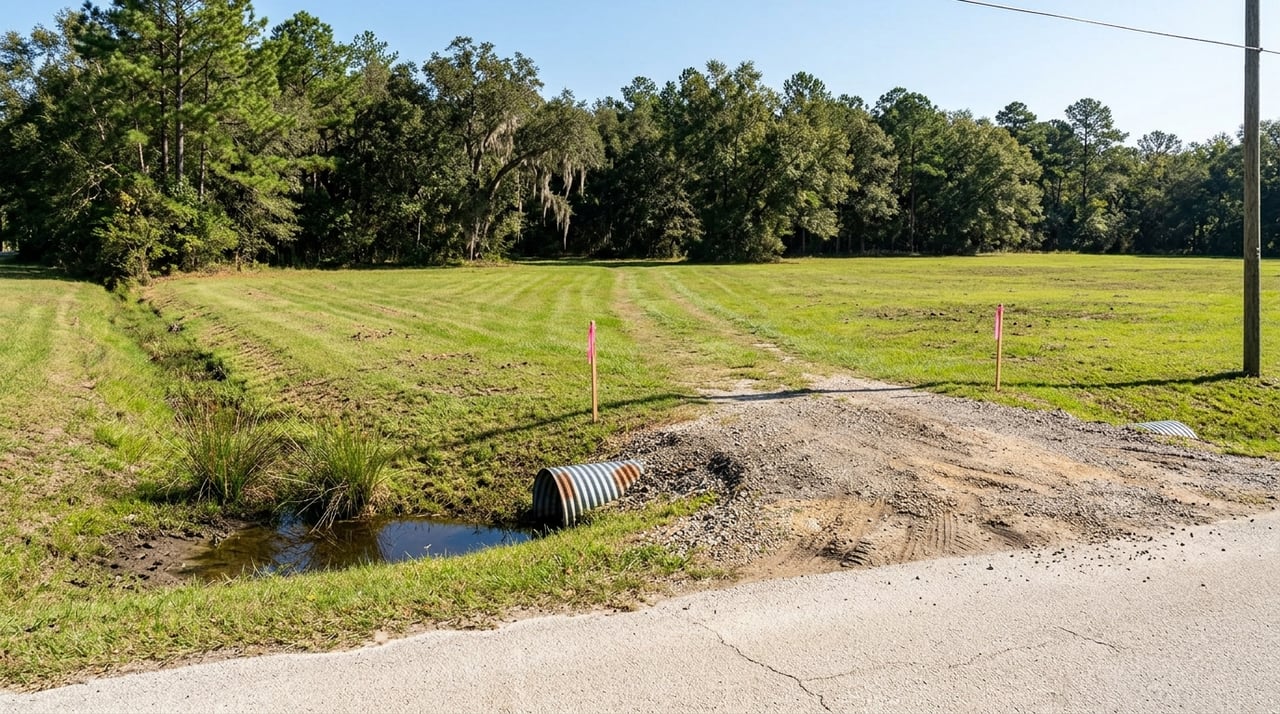
Even if a parcel is legally buildable, site preparation may still be a big part of the process. Drainage, clearing, setbacks, and stormwater planning can all shape your timeline and cost.
The parish checklist also references stormwater agreements, stormwater site plans, land-clearing permits, and impact fees. For buyers, that is a reminder that raw land often needs more upfront evaluation than an existing home.
Utilities are a tract-by-tract question
With rural land, utility assumptions can lead to expensive surprises. The parish building permit application asks whether water and sewer will be central or individual and lists Cleco, WST, and Entergy as electric company options.
That tells you something important: utility service is not one-size-fits-all near Folsom. Each parcel needs to be confirmed individually.
Public water options
If a lot is served by Folsom Water Supply, the Louisiana Department of Health’s 2025 water-grade report lists that system at 100 out of 100, grade A. That can be reassuring if public water is available to the tract you are considering.
Still, availability should be verified for the specific property. Nearby service does not always mean immediate service to the parcel itself.
Private well and septic considerations
Some acreage will rely on a private well and individual sewerage instead of central services. The Louisiana Department of Health notes that private wells are not covered by the Safe Drinking Water Act, and the owner is responsible for sampling and maintenance.
For onsite wastewater, the Louisiana Department of Health regulates these systems through parish sanitarians, and the parish checklist requires the state health permit for installation. If you are buying raw land, these are not minor details. They are part of determining whether the site works for your plans.
Plan your professional team early
Buying acreage near Folsom is often a site-feasibility purchase as much as a land purchase. Before assuming a tract is ready for your future home, it helps to line up the right professionals early.
Depending on the property, buyers may need a surveyor, septic or well contractor, and sometimes a civil engineer. The parish residential review process requires site-specific plans, and flood-sensitive situations can trigger more detailed architect or engineer sign-off.
Who may be involved
Your land purchase may go more smoothly when you bring in the right experts at the right time, such as:
- A real estate agent with vacant land experience
- A surveyor
- A title company or closing partner
- A septic or well contractor, if needed
- A civil engineer or design professional for more complex sites
A practical land-buying checklist
If you are comparing acreage around Folsom, use this checklist to stay focused on the details that matter most:
- Confirm whether the parcel is inside incorporated Folsom or another approval area
- Verify the current zoning and your intended use
- Review road frontage and access to a public road or recorded easement
- Order or review a current survey
- Check flood zone information early
- Confirm whether water and sewer are central or individual
- Verify electric service options for that tract
- Ask what site work, drainage planning, or permits may be needed
- Budget for clearing, stormwater items, and other pre-build costs
Why local guidance matters
Land can look straightforward online, but the real story is usually in the details. Near Folsom, those details often include zoning, frontage, flood-zone review, utility availability, and site preparation.
That is where local guidance can make a real difference. When you have someone helping you ask the right questions before you buy, you are more likely to avoid surprises and move forward with confidence.
If you are exploring land or acreage near Folsom, Amanda Stevens can help you evaluate your options, connect with trusted local partners, and take the next step with a clear plan.
FAQs
What should you check before buying land near Folsom?
- Confirm zoning, access, frontage, flood zone, utility availability, and whether the parcel falls inside incorporated Folsom or another local approval area.
Why does zoning matter for acreage near Folsom?
- Zoning affects what uses are allowed on the property, and similar-looking rural tracts may have different zoning classifications such as R-1, A-1, A-1A, or A-2.
How important is road frontage for land in St. Tammany Parish?
- It is very important because parish rules treat access and frontage as regulated issues, and frontage can affect how the property can be entered and used.
Do all land parcels near Folsom have public water and sewer?
- No. The parish permit process shows that water and sewer may be central or individual, so each tract should be verified separately.
What if a parcel near Folsom needs a private well or septic system?
- You should factor in additional due diligence, because private wells require owner maintenance and onsite wastewater systems are regulated through the Louisiana Department of Health.
Is buying acreage near Folsom the same as buying a build-ready lot?
- Not always. Many acreage purchases require close review of site feasibility, including flood status, access, utilities, drainage, and permit-related requirements.