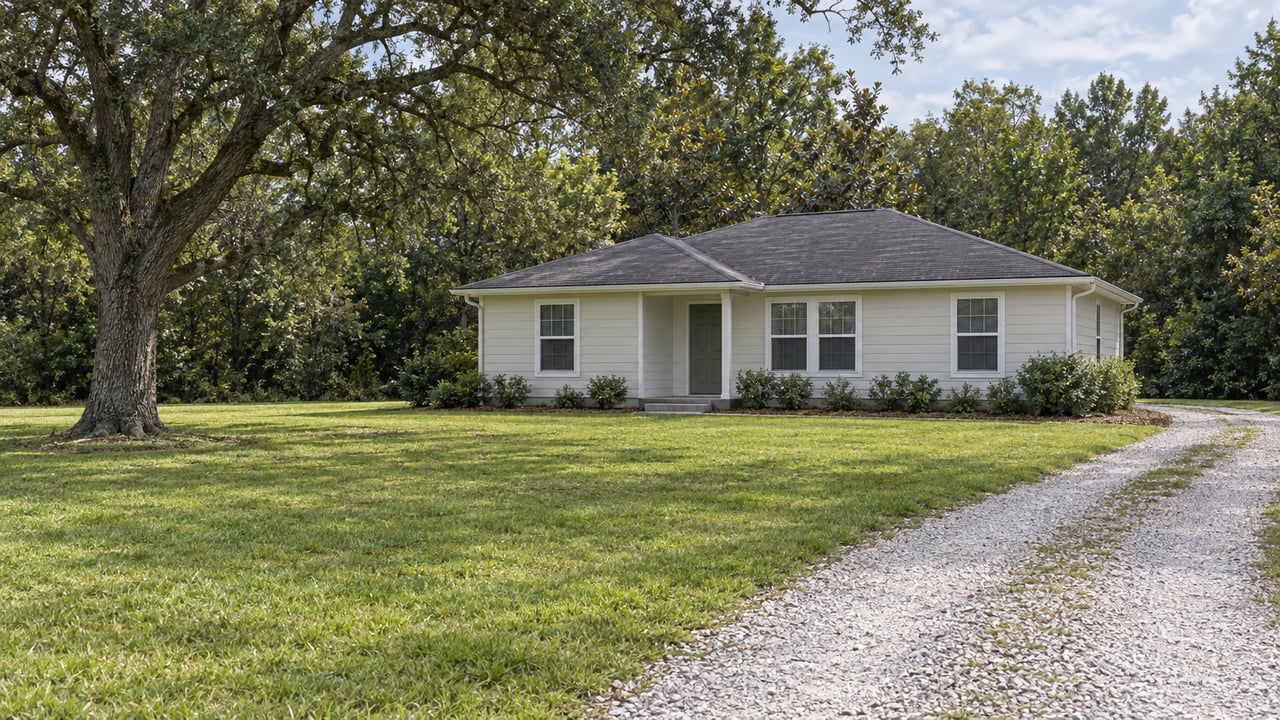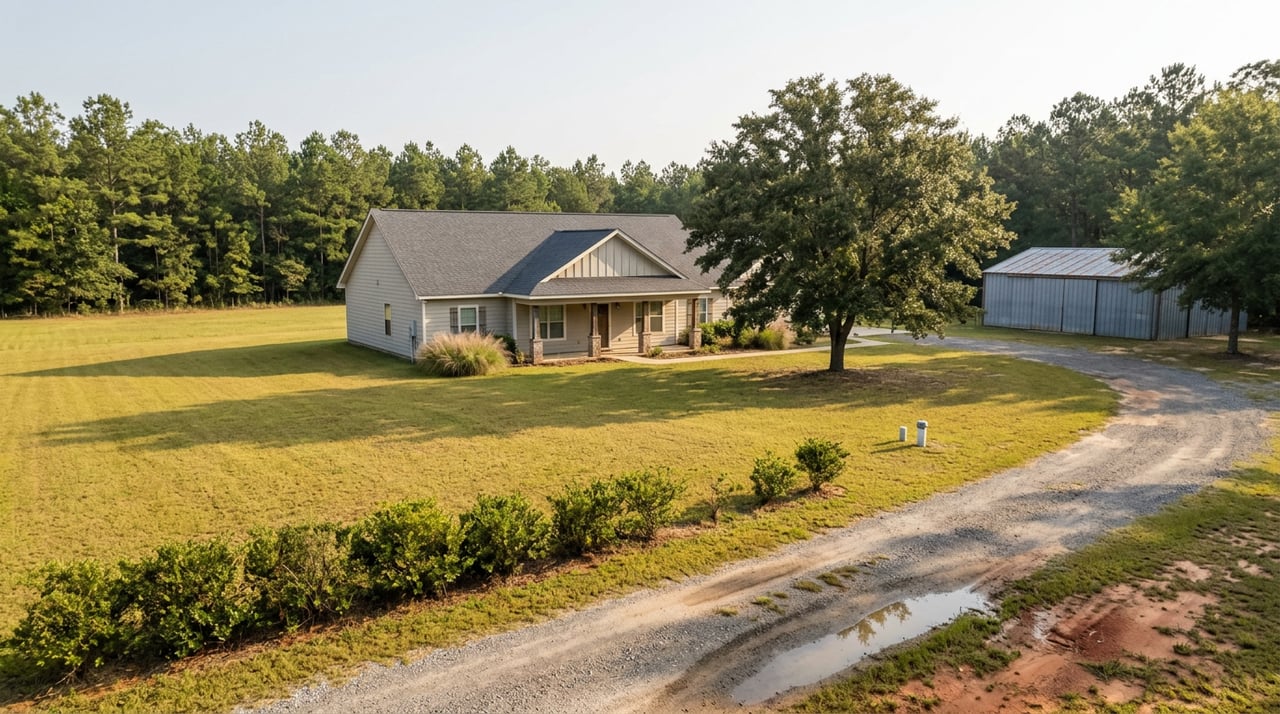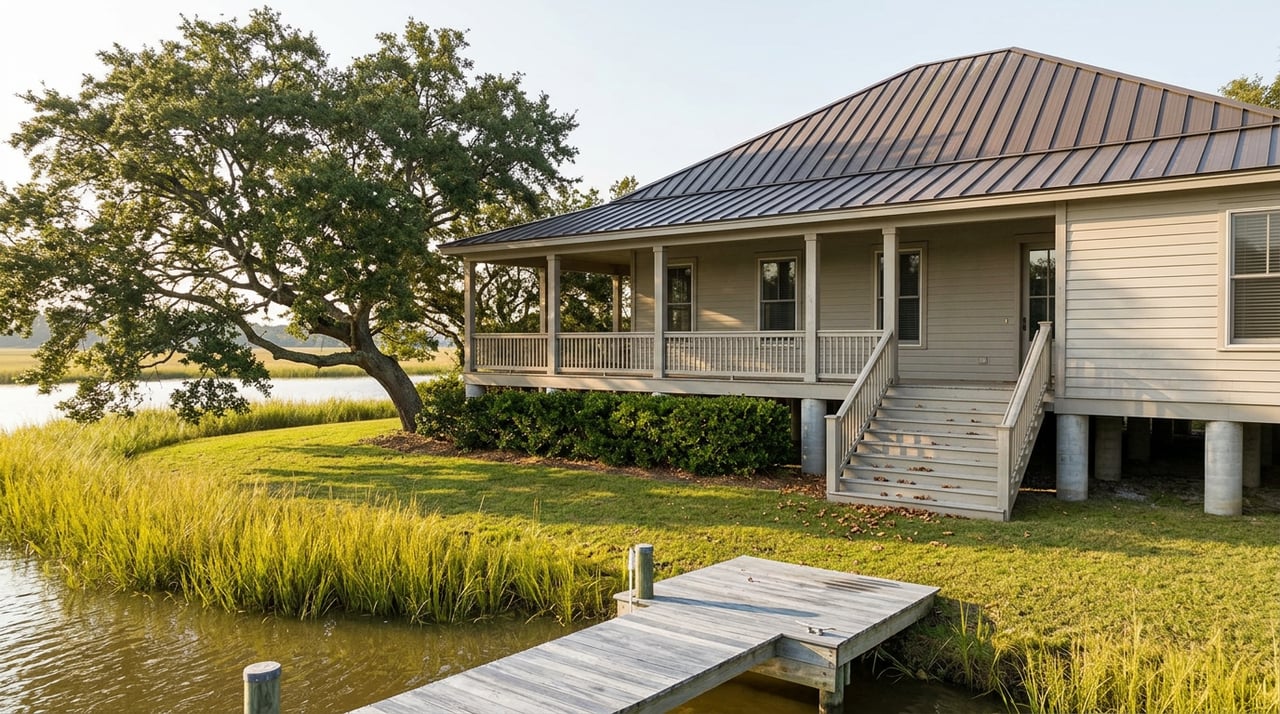
Picture two nearly identical listings in Madisonville, both priced at $450,000, both three bedroom, both a reasonable walk from downtown. A buyer comparing them on paper would call it a coin flip. Run the actual numbers with a lender and an insurance quote, though, and the monthly payment on one can land meaningfully higher than the other, not because of the mortgage rate, and not because of the tax bill, but because of which insurance market that specific address happens to fall into.
That gap rarely shows up before a buyer is already under contract. It shows up when the insurance quote comes back, usually after the inspection, sometimes after the appraisal, and it can be the reason a deal that looked settled starts to wobble. If you are comparing Madisonville to other spots on the Northshore right now, the list price is telling you less than you think.
The Number on the Sign Isn't the Number That Follows You Home
Homes in Madisonville listed for a median price of $455,000 in September 2026, with the typical listing spending 78 days on the market before going under contract. Read on its own, that looks like a market cooling just enough to give buyers a little room to breathe.
What that median doesn't carry with it is where a given address sits relative to the Tchefuncte River and Lake Pontchartrain. Madisonville's whole identity, the marina, the maritime history, the river views that make the town worth writing about, is also the reason its insurance picture doesn't move in step with a list price. A house three blocks from the water and a house of the same size and vintage a mile inland can be functionally the same purchase on the sale contract and a very different purchase on the insurance bill.
Two Separate Policies Wearing One Name
Buyers moving to Louisiana from out of state tend to lump "flood insurance" and "storm insurance" together in their heads. They're not the same product, and they don't move together.
Flood coverage in Madisonville runs through the National Flood Insurance Program, and it comes with a real, parish-wide break: St. Tammany Parish participates in FEMA's Community Rating System, which currently earns a 15 percent discount on flood insurance policies across the parish. That discount is baked in for eligible properties. It's one of the few pieces of this puzzle that works in a buyer's favor without any negotiating.
Homeowners insurance, the policy that covers wind damage, named storms, and the roof itself, is a different animal entirely, and it's the one where Madisonville's waterfront geography actually bites. There's no parish-wide discount softening that side of the ledger, and Chabert of Baton Rouge explains that federal law caps flood-premium increases for existing NFIP policyholders. A buyer who assumes the flood discount means their whole insurance picture is under control is looking at the wrong half of the bill.
Why the Water Draws a Line Through the Market
Protected by Chabert explains the different rate rules and guaranty-fund protections that apply to admitted and surplus lines carriers in Louisiana.
| Admitted Carriers | Surplus Lines Carriers | |
|---|---|---|
| Regulated by Louisiana Department of Insurance | Yes | No |
| Backed by the state guaranty fund if insurer fails | Yes | No |
| Rate changes | Regulated | Not bound by state rate rules |
| Common in Madisonville for | Inland, newer construction | Waterfront homes, older roofs |
Waterfront homes and properties with older roofs in Madisonville frequently end up placed with surplus lines carriers rather than admitted ones. That's not automatically a bad outcome. Surplus lines carriers can be financially sound and price competitively. But a buyer needs to know they're in that market, because the consumer protections built into the admitted side, most notably the guaranty fund that steps in if a carrier goes insolvent, simply don't apply.
You can find out which side of that line a listing sits on by asking the seller for the current insurance declarations page. If the policy is placed with a surplus lines carrier, the page will say so directly, typically with language noting the policy isn't covered by the Louisiana Insurance Guaranty Association.
What a "Buyback" Actually Costs, If You Can Get One
Named-storm deductibles run higher than a standard homeowners deductible, and some carriers offer a buyback endorsement that reduces that named-storm deductible down to a flat dollar figure. The catch is the price: expect to pay somewhere between 15 and 25 percent more in annual premium for that option, and for waterfront lots in the 70447 zip code, the buyback isn't always offered at all. A buyer pricing out a waterfront address needs to ask the question before assuming the option exists.
Tree coverage carries its own limits worth knowing before a storm tests them. Most policies cap tree removal at somewhere between $500 and $1,000 per tree, with a total claim limit typically in the $2,500 to $5,000 range, and that cap can be raised with an endorsement. Given how much of Madisonville's charm comes from mature tree canopy along the river and downtown streets, that's a detail worth pricing in rather than discovering after a named storm.
A house doesn't have one insurance number. It has two, and only one of them comes with a parish-wide discount attached.
Where This Hits Hardest, and Where It Doesn't
The pressure concentrates closest to the water, in the streets that hug the Tchefuncte River and the older housing stock nearer downtown, where roof age compounds the waterfront wind exposure. Newer construction further inland, stretching toward Highway 21, tends to sit in a different position on both counts: less wind exposure and newer roofs that admitted carriers are more comfortable writing.
That split matters for how a buyer reads statewide "good news" headlines about insurance. Louisiana's homeowners insurance market has reached a stabilization point as of mid-2026, with the average rate change across the state landing at roughly 0.1 percent. Some of that apparent calm comes from a real easing in carrier appetite. Some of it comes from a legislative change that now lets homeowners insure to loan value rather than full replacement cost, which lowers the quoted premium without necessarily lowering what it would actually cost to rebuild. A statewide average sanding over both of those effects is exactly the kind of number that looks reassuring and tells a Madisonville waterfront buyer very little about their specific address.
What to Ask Before You Write the Offer
A few questions, asked early, save a lot of surprise later:
- Ask the seller's agent for the current homeowners insurance declarations page, not just a summary.
- Look for language confirming or ruling out placement with a surplus lines carrier.
- Ask directly whether a named-storm deductible buyback is available on this specific address, and what it costs.
- Confirm with your lender that insurability has been checked at underwriting, not assumed from the list price.
- If the home sits within a block or two of the river, ask whether the roof's age has already triggered a decline from any admitted carriers.
None of this changes whether Madisonville is worth buying into. It changes when in the process you find out what owning that specific address will actually cost you every month, which is a much better time to know than after you've waived your financing contingency.
A Few Common Questions
Does flood insurance cover storm surge from Lake Pontchartrain? Yes, but only if the homeowner carries a separate flood policy. Standard homeowners insurance excludes flood and storm surge entirely, which is exactly why the two policies need to be evaluated on their own terms rather than assumed to move together.
Is Madisonville's median price actually falling? Different sources measuring the same month can disagree depending on whether they're tracking list price, price per square foot, or days on market, and Madisonville's numbers are no exception. The safer approach for a buyer is to treat any single median as a starting point for a conversation with a local agent, not a final answer.
How do I find out if a specific Madisonville address is in a high-risk flood zone? FEMA's Flood Map Service Center lets you search any address directly against the official Flood Insurance Rate Map, which is the document lenders and surveyors actually use.
If you're weighing a Madisonville address against something a little further inland, or trying to figure out what a specific street's insurance history looks like before you get attached to the house, that's exactly the kind of groundwork Amanda Stevens walks Northshore buyers through before an offer goes in, not after. Request a Free Market Consultation and let's look at the real numbers together.
This article is general information, not legal, tax or financial advice. Consult a qualified professional about your situation.